Real Estate Strategy, Simplified
Why Your Chevy Chase Renovation Permit Doesn't Start With the County
September 24, 2026
Real Estate Strategy, Simplified
September 24, 2026
In most of Montgomery County, adding a bedroom or bumping out a kitchen follows a predictable order: design the project, submit to the county's Department of Permitting Services, get approved, build. In parts of Chevy Chase, that order runs backward. Before the county will even open the file, a private village government has to approve the project first.
This isn't a quirk that only matters to someone mid-renovation. It matters just as much to a buyer walking through a listing with an addition already built, because the question of who approved that addition, and whether they approved it at all, sits underneath the square footage on the listing sheet.
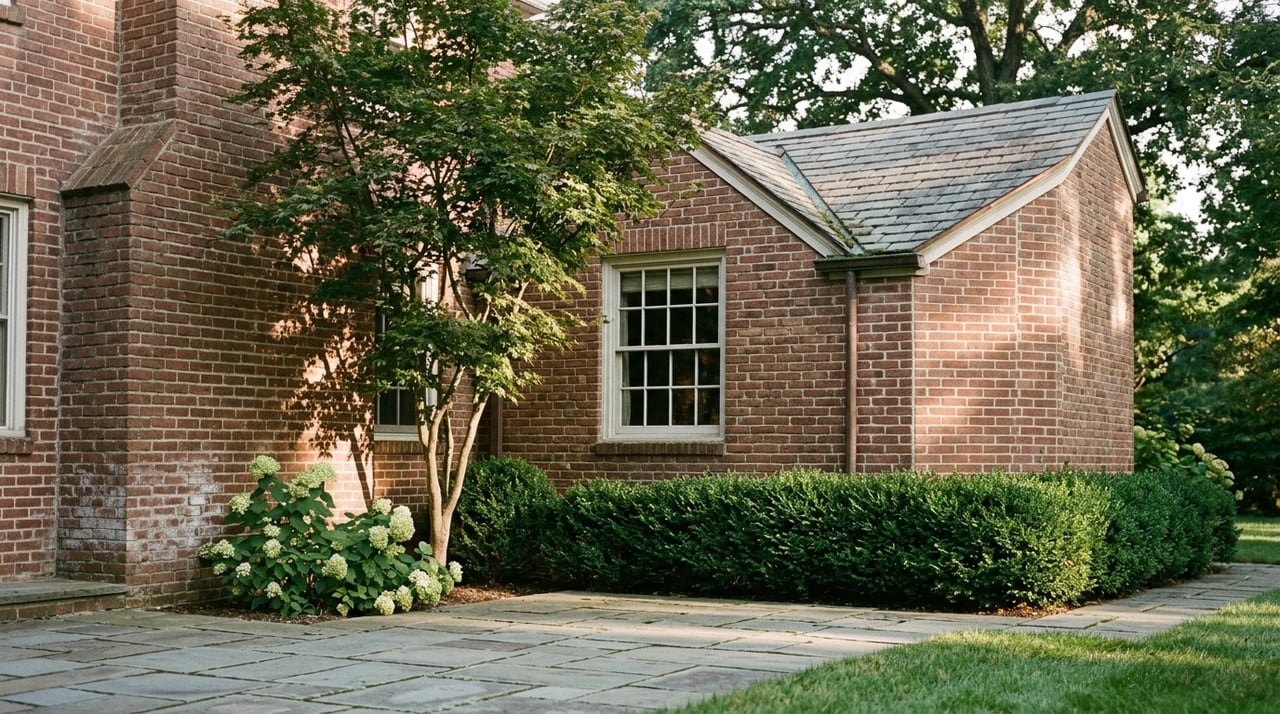
Chevy Chase Village is an incorporated Maryland municipality with its own government, run by an elected Board of Managers and a Village Manager, with one Board member serving as Building Officer. Inside the Village, no exterior change moves forward without Village approval first. That includes additions, new decks, rooflines, and sometimes even window replacements. Only after the Village signs off can a Montgomery County permit application even be submitted.
The sequence is what trips people up. Homeowners assume Chevy Chase permitting works like it does everywhere else in the county, and contractors who don't work in the Village regularly sometimes submit to the county first out of habit, then have to unwind that step and start again with the Village. Village Board review typically adds another six to ten weeks on top of the county's own six-to-ten-week Department of Permitting Services timeline, which means a project that felt straightforward on paper can run three to five months from first design sketch to an approved permit before a shovel touches dirt.
The Village also protects its tree canopy on its own terms. Before any work that risks a tree above a certain size, whether the tree sits on private or public property, the homeowner has to request a Tree Protection Plan from the Village's arborist. Violating the ordinance carries a fine of $1,000 per tree per day, which is a number worth knowing before a contractor stages equipment too close to a mature oak.
The name covers a cluster of separate jurisdictions, each with its own rulebook, and which one governs a given address depends entirely on where the property line falls.
| Where the property sits | Who reviews first | What that means for timeline |
|---|---|---|
| Chevy Chase Village | Village Board of Managers, before county | County review starts only after Village sign-off, adding roughly 6 to 10 weeks |
| Town of Chevy Chase | Town review, with its own zoning and drainage rules | Town won't issue its permit until an approved county permit is already in hand |
| Section 3 / Section 5 | Montgomery County DPS directly, no municipal layer | 4 to 8 weeks through the county alone, though many lots carry private deed covenants with their own architectural review |
| Chevy Chase DC (south of Western Avenue) | DC Department of Buildings, plus DC's Historic Preservation Review Board where applicable | An entirely different agency and building code, not Maryland's at all |
None of these governments talk to each other automatically. Confirming which one has authority over a specific address is the first call to make, not something to figure out once a contractor is already scheduled.
The Town of Chevy Chase, a separate incorporated jurisdiction from the Village, runs its own process with its own triggers. Any addition over 500 square feet on a single floor requires a Pre-Permit Application Consultation, and the immediate neighbors are invited to that meeting. A new impervious surface over 700 square feet requires a water drainage plan. Front setbacks aren't a fixed number the way they might be elsewhere. The Town calculates the "established building line" from the average setback of the houses already on the block, so two lots on the same street can have two different allowable setbacks. Fences and walls are capped at 6.5 feet, and a front yard fence isn't allowed by right without a variance from the Town Council.
The Town will not issue its own building permit without a copy of the county's approved permit already in hand, which is the opposite sequence from the Village next door. A homeowner who has done a renovation in Chevy Chase Village and assumes the Town works the same way is likely to submit paperwork in the wrong order twice.
Chevy Chase's resale market rewards renovation, and buyers comparing properties in Section 5, the Village, and nearby Hamlet tend to be well informed and often represented by agents evaluating several homes side by side. A renovated home in that kind of competitive set commands a real premium over an unimproved comparable. But the reverse is also true: an addition that clearly wasn't designed around the home's original Colonial Revival or Tudor proportions stands out to a buyer touring the block, and it works against the home's perceived value rather than for it.
That cuts both ways for a buyer evaluating a specific listing. If a home already has an addition, it's worth asking which jurisdiction approved it and whether that approval actually happened, because an addition built without the right sign-off can surface as a problem during a title search or a future renovation of your own. If the home sits within Montgomery County's Master Plan for Historic Preservation, any exterior change also requires a Historic Area Work Permit from the county's Historic Preservation Commission before a building permit issues at all, adding another six to eight weeks in a process that runs alongside, not instead of, the Village or Town review.
For a seller weighing whether to finish a renovation before listing, the same jurisdictional rules apply either way. A project matched to the home's existing lines reads as quality to the exact kind of informed buyer walking Chevy Chase's competitive resale market right now.
A few checks are worth doing before an offer goes in or a contract gets signed:
Do I need both a Village or Town permit and a county permit? In Chevy Chase Village, yes for most exterior changes, and the county won't accept the application until the Village has approved it first. In the Town of Chevy Chase, some projects need both, some need only a Town permit for smaller items like a replacement fence or a wall under 30 inches, and the Town won't issue its own permit until a county permit already exists.
What if the home is in Section 3 or Section 5? There's no separate Village or Town government layer, so the application goes to Montgomery County DPS directly. Many properties in these areas still carry private deed covenants with their own architectural review requirements, so it's worth checking those documents before assuming the county is the only approval needed.
Does any of this apply to a kitchen or bathroom remodel that doesn't touch the exterior? Generally no. Interior work that doesn't change the home's footprint or roofline moves through county permitting only, regardless of which Chevy Chase jurisdiction the home sits in. The extra layers described here mainly apply to additions, exterior changes, and rooflines.
If you're comparing a home in Chevy Chase Village against one a few blocks away in Section 5, or trying to figure out whether an addition already on a listing was actually approved by the right authority, that's exactly the kind of detail worth sorting out before an offer goes in. Lina McAuliffe works this market address by address. Let's Connect.
Real estate doesn’t need to feel overwhelming. I break down what’s happening locally so you can act with clarity and confidence. Whether you're selling or exploring your options, this is where strategy begins.
October 1, 2026
September 24, 2026
September 17, 2026

September 10, 2026

September 3, 2026

August 27, 2026

August 20, 2026

August 13, 2026

August 6, 2026
Lina brings structure and clarity to every step of the selling process. She focuses on what drives results, eliminating unnecessary complexity. You get a clear plan and confident execution.

Lina McAuliffe
4600 North Park Ave, Ste 100 Chevy Chase, MD 20815