Real Estate Strategy, Simplified
Chevy Chase MD Neighborhoods: Housing, Character & Walkability
June 25, 2026
Real Estate Strategy, Simplified
June 25, 2026
If you are trying to understand Chevy Chase, one of the first surprises is that it is not just one neighborhood with one feel. It is a collection of neighborhoods and municipalities, and that difference matters when you are buying, selling, or simply comparing blocks. If you want a clearer picture of Chevy Chase neighborhoods, housing styles, and walkability, this guide will help you know what to look for and why it matters. Let’s dive in.
Chevy Chase in Montgomery County is best understood as a group of neighborhoods and municipalities rather than one uniform subdivision. Montgomery Planning describes Bethesda-Chevy Chase as a collection of neighborhoods in southern Montgomery County, and local civic histories show that the Chevy Chase area developed through multiple sections, municipalities, and taxing districts over time.
That means your experience can vary depending on where you are standing. One part of Chevy Chase may feel especially quiet and residential, while another may sit closer to shops, transit, and daily conveniences. For buyers and sellers, that local variation is a big part of the story.
Chevy Chase Village is one example of how specific these differences can be. The village reports about 720 homes in just under half a square mile, while Section 3 history notes 282 lots that still reflect the original section designations. In practical terms, the name “Chevy Chase” covers places with distinct identities, block patterns, and housing character.
Chevy Chase began as a planned streetcar suburb, and that early vision still shapes how the area feels today. Montgomery Planning describes the original development as an ideal community built with transportation, infrastructure, public institutions, and strong landscape and architectural standards in mind.
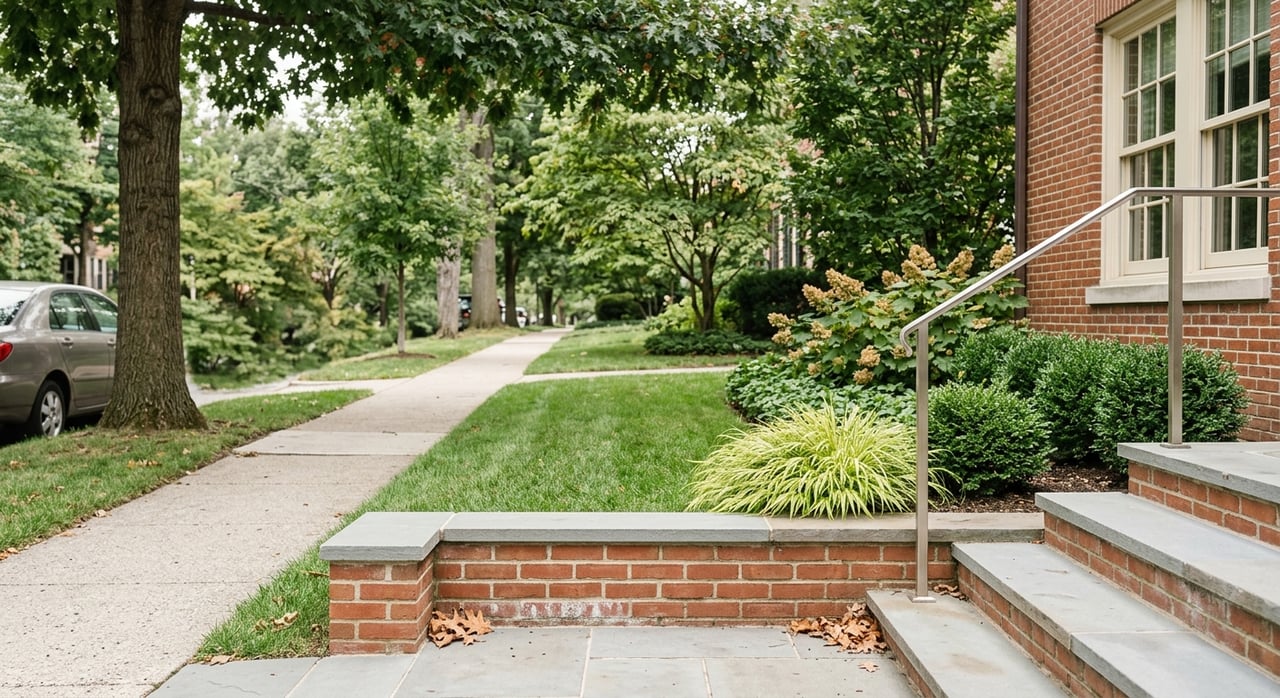
You can still see that planning in the streetscape. Historic materials describe curving streets, shade trees, and even double rows of trees along major streets. Those design choices helped create the established, leafy feel that many people still associate with Chevy Chase.
This is one reason the area often feels cohesive even when the housing stock is not identical from block to block. The landscape, street layout, and residential scale help tie different sections together. For many buyers, that setting is part of the appeal as much as the homes themselves.
Chevy Chase is strongly associated with early 20th-century detached homes. Historic preservation materials describe an exceptional concentration of high-style residences, including Colonial Revival, Neoclassical, Shingle, Tudor Revival, Italian Renaissance, and Craftsman homes.
Many of the pre-World War I homes were built on sizeable lots and at a larger scale. That helps explain why some streets feel especially formal or substantial compared with nearby areas. If you are drawn to traditional architecture and established homesites, Chevy Chase often delivers that combination.
At the same time, Chevy Chase is not frozen in one style. Montgomery Planning notes that the 1941 Art Moderne Mesrobian House stands out as a notable exception among more traditional revival-style homes near Connecticut Avenue. So while the overall impression is historic and traditional, you may still find occasional architectural outliers.
When you walk through Chevy Chase, a few features usually stand out right away:
Those features do not appear in exactly the same way in every section. Still, they help explain why Chevy Chase has a distinct identity within close-in Montgomery County.
In Chevy Chase, the landscape matters almost as much as the architecture. Village history highlights the original emphasis on shade trees and ornamental planting, and Section 5 notes that its tree ordinance is designed to protect and preserve the village tree canopy, including more than 400 street trees in the public right-of-way.
That long-term commitment to greenery shows up in the day-to-day experience of the neighborhood. Tree-lined streets, established planting, and low-rise residential blocks all contribute to the area’s visual identity. It is a major reason many parts of Chevy Chase feel settled and calm.
Historic records also show that public improvements supported that character over time. The Town of Chevy Chase history references sidewalk and street repairs in the 1930s, along with a tree-planting program in public spaces. For today’s buyers and sellers, that history helps explain why curb appeal and landscape quality remain central to how homes are perceived here.
One of the most helpful things to understand about Chevy Chase is that walkability is not the same everywhere. Chevy Chase Village describes tree-lined streets, brick sidewalks, open parks, and walking-distance access to public transportation, shopping, restaurants, and theaters. That said, some areas are much closer to those amenities than others.
Historically, the main retail edge developed along Connecticut Avenue. Local history notes that the key commercial hub grew just south of Chevy Chase Circle, while much of the surrounding development remained residential. That helps explain why interior blocks can feel quieter and more tucked away than corridor locations.
So if walkability is high on your list, it helps to define what you mean. You may be looking for an easy walk to shops and dining, or you may prefer a residential setting with sidewalks, parks, and pleasant streets for daily walks. In Chevy Chase, both can exist, but usually not in the exact same way on every block.
Depending on the section, walkability in Chevy Chase may include:
That is why location within Chevy Chase matters so much. A home’s relationship to corridors, retail edges, and transit can shape how you use the neighborhood every day.
One of the biggest changes in the broader area is centered on Chevy Chase Lake. Montgomery County’s approved sector plan calls for mixed-use zoning in the Chevy Chase Lake Center, public open space, and new street and station access tied to the Purple Line.
Maryland’s Purple Line project says the 16-mile light rail line will connect 21 stations and is slated to open in late 2027. The state’s rail station list includes a Chevy Chase Lake Station at Connecticut Avenue. That makes Chevy Chase Lake the most important current transit-oriented change in the area.
For buyers, this helps separate the neighborhood into different patterns of living. The more mixed-use future is concentrated around Chevy Chase Lake, not spread evenly across all of Chevy Chase. If you want a more transit-connected, evolving setting, that area may feel different from the more traditional residential sections.
The Capital Crescent Trail is one of the area’s standout location features. Montgomery Parks says the trail follows an abandoned railroad right of way and runs 11 miles from Georgetown to Silver Spring. It is also heavily used as a commuter trail to Georgetown and Washington, DC.
For some buyers, trail access supports recreation and commuting at the same time. For others, it simply adds another layer of connectivity and outdoor access that strengthens the overall location. Either way, it is an important part of how many people experience the broader Bethesda-Chevy Chase area.
If you are buying in Chevy Chase, it helps to think in layers rather than labels. The area generally offers a blend of historic character, mature landscape, and a close-in Montgomery County location, but the exact mix changes from one section to another.
The most traditional-feeling blocks tend to be the ones with larger historic homes and stronger tree canopy. The most walkable blocks are often the ones closer to retail and transit corridors. If your priorities include architecture, lot size, daily convenience, or future transit access, comparing micro-locations is essential.
This is where a practical strategy matters. Instead of asking whether Chevy Chase is walkable or whether Chevy Chase has character, the better question is which part of Chevy Chase best matches how you want to live.
If you are selling in Chevy Chase, the neighborhood’s identity can be one of your home’s greatest strengths. In this market, architectural integrity, lot and landscape quality, and proximity to corridor amenities all help shape how buyers see value.
Because Chevy Chase was built around planned residential design, details that might seem cosmetic elsewhere can carry more weight here. Mature trees, street presence, original style, and the relationship between the home and its setting are part of the area’s core appeal.
That makes preparation and positioning especially important. A thoughtful strategy should highlight not just the house, but also the specific section, streetscape, and lifestyle benefits that come with that location.
If you are considering a move in Chevy Chase or nearby Montgomery County, working with a local advisor can help you compare neighborhoods, evaluate value, and prepare a smart plan. For tailored guidance on buying or selling, connect with Lina McAuliffe.
Real estate doesn’t need to feel overwhelming. I break down what’s happening locally so you can act with clarity and confidence. Whether you're selling or exploring your options, this is where strategy begins.
October 22, 2026
October 22, 2026
October 15, 2026
October 8, 2026
October 1, 2026
September 24, 2026

September 10, 2026

August 27, 2026

August 20, 2026
Lina brings structure and clarity to every step of the selling process. She focuses on what drives results, eliminating unnecessary complexity. You get a clear plan and confident execution.

Lina McAuliffe
4600 North Park Ave, Ste 100 Chevy Chase, MD 20815